Chocolate Kiwi Pudding
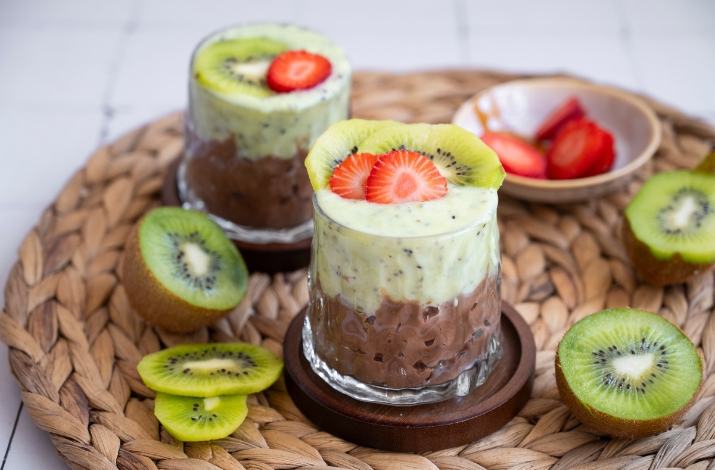
The recipe makes 4 servings.
Ingredients:
For the Chocolate Layer:
2 scoops HLTH Code Chocolate
1/2 cup (120ml) unsweetened almond milk
1 Tbsp (15g) melted coconut oil
1-2 tsp monk fruit sweetener
1/2 tsp vanilla extract
Pinch of sea salt
For the Kiwi Layer:
2 ripe kiwis, peeled and chopped
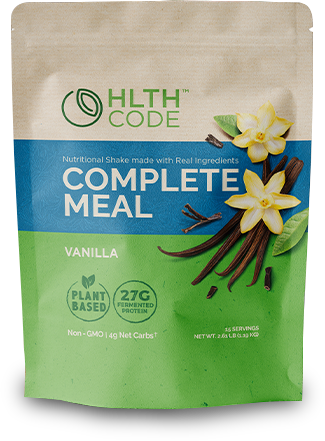
1/2 scoop HLTH Code Vanilla
1/4 cup (60ml) full-fat coconut milk
1 tsp powdered monk fruit sweetener
1 tsp lemon juice
To Garnish (optional)
Kiwi & strawberry slices
Instructions:
For the Chocolate Layer: In a blender or mixing bowl, combine 2 scoops of HLTH Code Chocolate, almond milk, melted coconut oil, monk fruit sweetener, vanilla extract, and a pinch of sea salt.
Blend or whisk until smooth and creamy.
For the Kiwi Layer: Blend the chopped kiwis, HLTH Code Vanilla, coconut milk, monk fruit sweetener, and lemon juice in a blender until smooth.
Taste and adjust the sweetness if needed.
Pour the chocolate mixture evenly into serving glasses or bowls, creating the first layer.
Carefully spoon the kiwi mixture over the chocolate layer, smoothing it out to cover the surface.
Refrigerate the pudding for at least 1 hour to allow the layers to set and firm up.
Garnish with kiwi and/or strawberry slices and serve chilled.
Nutritional breakdown per serving. Recipe makes 4 servings.
250 Calories
17g Protein
18g Fat
5g Fiber
10g Total Carbs
5g NET Carbs

Most Popular